

| Contact |
|
UB*CDE aphalen@buffalo.edu Phone: (716) 829-2320 Fax: (716) 829-2484 Click here for more information. |
Course Details 9am ~ 4pm (6 CE Hours ADA/CERP) Friday, February 18, 2011 Buffalo-Niagara Marriott 1340 Millersport Hwy, Buffalo, NY Tuition UB Dental Alum Member $225 Nonmember Dentist $265 Team Member $95 Guest faculty: 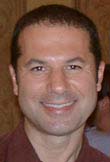 Dr.
Tiziano Baccetti is presently Research Professor at
the University of Florence, Italy, and Thomas M. Graber
Visiting Scholar, Department of Orthodontics and Pediatric
Dentistry, School of Dentistry, The University of Michigan, Ann Arbor. He
has been Speaker at the Annual Sessions of the American Association of
Orthodontists, U.S.A., for the last 12 years. He has lectured at international
congresses and symposia on orthodontics and dentofacial orthopedics in 25
different countries. In May 2011, dr Baccetti will be awarded the Salzmann
lecture at the AAO Annual Meeting in Chicago, USA. He
has been published extensively (more than 150 articles in journals with Impact
factor) in the American Journal of Orthodontics and Dentofacial Orthopedics,
in the
Angle Orthodontist, and in the
European Journal of Orthodontics. |
The School of Dental Medicine with support for the John Cunat Educational Fund Presents A Day with special guest faculty Dr. Tiziano Baccetti 9am-4pm, Friday, February 18, 2011 Buffalo-Niagara Marriott, Millersport Hwy, Buffalo, NY  Factors of Success in Orthodontics and Dentofacial Orthopedics...what to do and how to do it! Dr. Baccetti
highlights the role of individual skeletal maturation (assessed by means
of the Cervical Vertebral Maturation -CVM -method) on treatment outcomes in different
types of malocclusions as well as the importance of considering patient
craniofacial morphology for the anticipation of outcomes of dentofacial
orthopedics. Learn fundamental aspects related to an efficient approach to
orthodontic treatment as a function of treatment timing. The treatment
protocols that currently are known to be most efficient in the treatment of
different dentoskeletal problems will be illustrated in detail.
Program: The efficiency of orthodontic treatment: a step beyond effectiveness Ideal requisites of an efficient
treatment protocol in orthodontics and dentofacial orthopedics The goal: to identify, learn, and
apply factors of success Factors of success in treatment of Class III MalocclusionThe early diagnosis The 3 fundamental clinical rules
for favorable outcomes of orthopedic treatment The identification of best
responders to orthopedic treatment: method revisited 2009 The protocols to avoid: what does not work, and
what works with low efficiency The new frontier offered by dentofacial
orthopedics associated with miniscrews Factors of success in treatment of Class II MalocclusionTiming of treatment and skeletal
growth modification in Class II malocclusion Identification
of ideal candidates for functional appliances versus molar distalization The role of functional jaw
orthopedics in unfavorable Class II patients New possibilities of Class II
treatment in young adults Factors of success in treatment of dentoskeletal open biteThe unpredictable malocclusion The elimination of unfavorable
habits in dentoskeletal open bite The
bite-block effect Treatment
of anterior open bite in the mixed dentition: quadhelix-crib therapy. Diagnostic rationale when approaching dental anomalies: how to intercept or
treated impaction of the maxillary caninesPalatal
vs buccal impaction Effectiveness of interceptive
treatment of palatially displaced canines The tunnel
technique for the orthodontic traction of impacted canines: Factors of orthodontic and periodontal success At the end of this program, you will: 1. Be proficient in performing the diagnosis of individual skeletal
maturation by means of the CVM method.
This part of the lectures will focus on: -Description of
the stages in cervical vertebral maturation and their correlations with
mandibular growth -Tips and practical hints to perform CVM analysis properly -Calibration test for the course participants 2. Be able to identify optimal timing for treatment of different
malocclusions according to individual skeletal maturation. Optimal treatment
timing will be described for orthodontic/orthopaedic therapy of Class II and
Class III malocclusions. 3. Be able to identify those patients who will be ideal candidates for
one type of treatment vs another. 4. Become familiar with
findings of the most relevant research on the short-term and long-term outcomes
of orthopedic therapy of different malocclusions on the basis of treatment
timing. The results of clinical trials performed by the speaker in more than 15
years of scientific collaboration will clarify what to expect from the use of
orthopedic appliances such as the facial mask, different functional appliances,
and rapid maxillary expansion. 5. Know how to intercept canine
impaction with the greatest efficiency and how to approach impacted canines
surgically and orthodontically for the best final result (from both an occlusal
and periodontal aspects). Intended Audience The
final goal of contemporary orthodontics is to improve clinical efficiency. The outcomes of
orthodontic treatment depend strongly upon the biological responsiveness of
individual patients, which in turn is related to treatment timing. Timing of
orthodontic/orthopedic therapy may have a more relevant impact on treatment
results than the specific treatment protocol accomplished. The course will highlight the role of individual skeletal maturation (assessed by means of the Cervical Vertebral Maturation -CVM -method) on treatment outcomes in different types of malocclusions as well as the importance of considering patient craniofacial morphology for the anticipation of outcomes of dentofacial orthopedics. The participants will learn fundamental aspects related to an efficient approach to orthodontic treatment as a function of treatment timing. The treatment protocols that nowadays are known to be most efficient in the treatment of different dentoskeletal problems will be illustrated in detail. The
core of the course will be devoted to the improvement of efficiency in
different areas of clinical orthodontics: Class II, Class III, and tooth
eruption disturbances. The speaker will describe the short-term and long-term
results of dentofacial orthopedics in relation to treatment timing as derived
from over 15 years of clinical investigations. |

University at Buffalo CDE * 327 Squire Hall * Buffalo, NY 14214
Phone 716.829.2320 * Fax 716.829.2484 * Toll free 800.756.0328